Reviewed by Joe Espinoza, HVAC Field Supervisor at Air & Drain Works. Licensed by the Texas Department of Licensing and Regulation, ACR license TACLB00127577E.
In San Antonio, most people don’t touch the heat until a cold front blows through, usually somewhere around Thanksgiving. The city’s average first freeze is November 30. So the first cold morning is also the first time in months your heater has had to do anything, and that’s when you find out it’s blowing cold air or not turning on at all.
The most common cause is also the easiest fix: the thermostat fan is set to “On” instead of “Auto.” Here are the 9 things to check, in order:
- Thermostat fan set to “On”
- Heat pump air that just feels cooler
- Heat pump in defrost mode
- A dirty air filter
- An ignition or flame sensor problem
- Thermostat settings or dead batteries
- A tripped breaker or power switch
- The furnace door panel
- A clogged condensate line or tripped float switch
The first five usually explain a heater blowing cold air. The last four usually explain a heater that won’t turn on.
“On the first cold morning of the year, most of the no-heat calls we run in San Antonio come down to something small: a thermostat fan left on ‘On,’ a filter that’s been in since summer, or a dirty flame sensor. Check the easy stuff first. If the burners click but won’t light, or the breaker keeps tripping, that’s when you call us.”
Joe Espinoza, HVAC Field Supervisor
First, Do You Have a Gas Furnace or a Heat Pump?
Some of these checks apply to one system and not the other, so it helps to know which one you have. Plenty of San Antonio homes have each.
- Gas furnace: there’s a gas line running to the indoor unit and a metal vent pipe going up through the roof or out a wall. Your outdoor unit sits still in winter.
- Heat pump: there’s no gas line to the indoor unit, and the outdoor unit runs in winter as well as summer. Your thermostat probably has an “Emergency Heat” or “Aux Heat” setting.
Quick Diagnosis
| What you’re seeing | Most likely cause | Can you fix it? |
|---|---|---|
| Cool air between heating cycles | Thermostat fan set to “On” | Yes. Switch it to “Auto” |
| Heat pump air feels lukewarm, but the house is warming | Normal heat pump operation | Nothing to fix |
| Cool air for a few minutes, steam from the outdoor unit | Heat pump defrost cycle | Nothing to fix |
| Furnace runs, then blows cool air | Dirty air filter or ignition problem | Change the filter. Call if it continues |
| Clicking, but no flame | Ignitor or flame sensor | Call a technician |
| Nothing happens at all | Thermostat, breaker, power switch, door panel or drain | Usually yes. Work through checks 6 to 9 |
| Breaker trips again after reset | Electrical fault | Call a technician |
If Your Heater Is Blowing Cold Air
1. The Thermostat Fan Is Set to “On”
Your thermostat has a fan setting, usually “Auto” and “On.” On “Auto,” the blower only runs while the system is heating. On “On,” it runs nonstop, so between heating cycles it pushes room-temperature air through the vents, and that feels cold.
Switch it to “Auto,” wait 10 minutes and check the vents again. If the air is warm, nothing was broken.

2. Heat Pump Air Just Feels Cooler
A heat pump heats differently than a gas furnace. Air coming off a heat pump is typically between 90°F and 110°F, while a furnace delivers air around 125°F at the vents. Air in the low 90s is cooler than your body temperature, so it can feel cool on your hand even while it’s warming the house.
Use a thermostat to test, not your hand. If the room temperature is climbing toward your setting, the heat pump is working. Heat pumps run longer, gentler cycles, so give it time.
With a gas furnace, the blower waits a short time after the burners light before it starts, so you shouldn’t feel much cold air at startup.
3. Your Heat Pump Is in Defrost Mode
On cold, damp mornings, frost builds up on a heat pump’s outdoor unit. To clear it, the system briefly switches into cooling mode to warm the outdoor coil. According to a Department of Energy heat pump guide, defrost typically takes 5 to 15 minutes, and backup heat may turn on during it to keep the house warm. You may see steam coming off the outdoor unit. That’s normal, and the system should go back to heating on its own.
You’ll also see “Emergency Heat” on most heat pump thermostats. It skips the heat pump and runs only the backup electric heat strips, which the same DOE guide calls “costly and inefficient.” Use it only if the outdoor unit stops working, and call for service. Learn more about heat pump repair.
4. The Air Filter Is Dirty
In San Antonio, the same filter that ran all summer for your AC is the one in place when the heat comes on. If it’s clogged, a gas furnace can overheat. A safety switch then shuts off the burners while the blower keeps running, and you get cool air out of the vents. On a heat pump, a clogged filter cuts airflow and makes the air feel weak and cool.
Pull the filter and hold it up to a light. If you can barely see through it, replace it. A standard 1-inch filter should be changed every 1 to 3 months, and a 4-inch media filter every 6 to 12 months.
5. The Furnace Isn’t Lighting or Staying Lit
Gas furnaces only. Most furnaces built in the last couple of decades use an electronic ignitor instead of a standing pilot light. If the ignitor fails, the burners never light. If the flame sensor is dirty, the burners light and then shut off a few seconds later. Either way, the blower can end up moving cold air, and the furnace may lock itself out after a few failed tries.
Clicking with no flame is a common sign. Don’t try to fix ignition parts or relight anything yourself. This is a job for an HVAC technician.
If Your Heater Won’t Turn On at All
6. Thermostat Settings or Dead Batteries
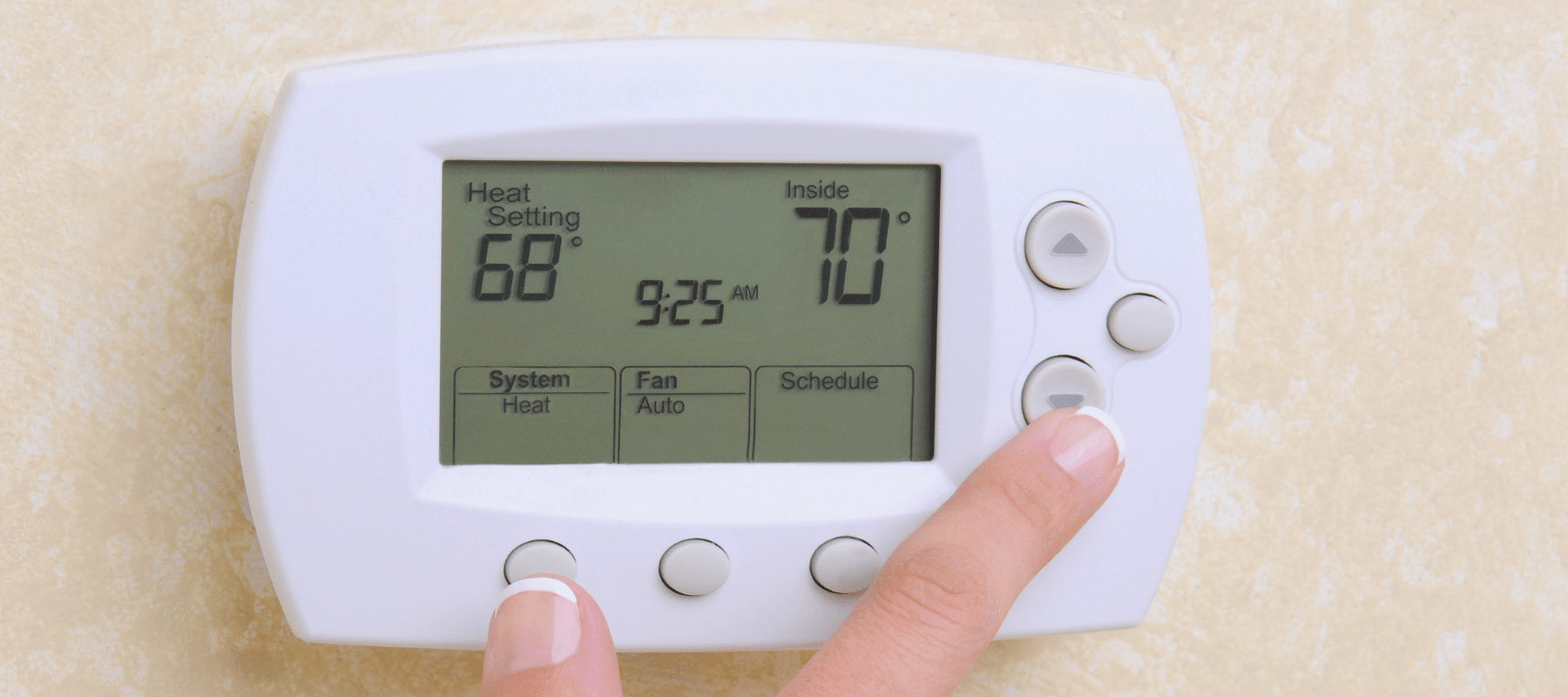
Make sure the thermostat is set to “Heat,” not “Cool” or “Off,” and set a few degrees above the current room temperature. If the screen is blank or dim, replace the batteries.
7. A Tripped Breaker or the Furnace Power Switch
Check your breaker panel for a tripped breaker labeled furnace, air handler or HVAC. Next to the indoor unit there’s also a switch that looks like a regular light switch. Make sure it’s on. If the breaker trips again after you reset it, stop and call for service.
8. The Furnace Door Panel Isn’t Closed
Furnaces have a safety switch that keeps them off when the front panel isn’t seated all the way. If someone recently changed the filter or looked inside, make sure the door is pushed in and latched.
9. A Clogged Condensate Line or Tripped Float Switch
High-efficiency gas furnaces make water while they run, and your AC drain pan can still be holding water from summer. Many systems have a float switch that shuts everything off when the drain backs up, heat included. If you see water in the drain pan or around the indoor unit, a clogged condensate line is a likely cause.
When to Stop Troubleshooting and Call a Pro
Call for service if:
- The burners won’t light, or you hear clicking with no flame
- The heat pump’s outdoor unit is covered in ice that doesn’t clear after a defrost cycle
- The breaker trips again after you reset it
- You’ve checked the fan setting, filter and thermostat, and the heater is still blowing cold air
- A burning smell lasts more than the first few minutes of the season. See our guide to furnace burning smells.
Two situations need action before anything else:
- If you smell gas, leave the house right away and leave the door open behind you. Don’t flip switches or use your phone inside. Once you’re away from the house, call 911 and CPS Energy at 210-353-HELP (4357). See CPS Energy’s gas safety guide.
- If your carbon monoxide alarm goes off, get everyone outside and call 911.
When the simple checks don’t fix it, our technicians handle heater repair in San Antonio for both gas furnaces and heat pumps.
How to Avoid This Next Winter
Most no-heat calls on the first cold morning trace back to parts that wear out or get dirty over the off-season: ignitors, flame sensors, filters and drain lines. A heater maintenance visit in October or early November catches those before the first cold front.
If your system is older and keeps breaking down, or some rooms never warm up, read signs it may be time to replace your furnace.
Frequently Asked Questions
Why is my heater blowing cold air?
The most common cause is the thermostat fan set to “On” instead of “Auto.” Other causes include a dirty air filter, a gas furnace that isn’t lighting or staying lit, and a heat pump running a defrost cycle.
Why is my heat pump blowing cold air in heat mode?
Heat pump air typically comes out between 90°F and 110°F, which can feel cool on your hand even while it’s heating the house. It may also be in a defrost cycle, which usually lasts 5 to 15 minutes. If the house isn’t warming up at all, call for service.
Why won’t my furnace turn on?
Check the thermostat setting and batteries, the breaker, the power switch next to the unit, the furnace door panel and the condensate drain. If all of those are fine, the problem is likely an ignition or control part that needs a technician.
Is it normal for a heater to blow cold air at first?
A heat pump can blow cool air for a few minutes during defrost. A gas furnace usually delays the blower until the air is warm, so steady cold air from a furnace points to a problem.
Should I use emergency heat?
Only if the heat pump’s outdoor unit stops working. Emergency heat runs the backup electric heat strips alone, which costs much more to run. Turn it on to stay warm, then call for service.
Need Heater Repair in San Antonio?
If your heater is blowing cold air or won’t turn on after these checks, give us a call. Air & Drain Works offers 24/7 heater repair for gas furnaces and heat pumps across the San Antonio area, with a 4.9-star rating from more than 900 Google reviews. Call (210) 404-7723.