
If your AC runs constantly but the house won’t cool, the cause is usually one of five things: a dirty air filter, a thermostat set or reading wrong, low refrigerant from a leak, a failing compressor or capacitor, or a clogged condensate line. Filters and thermostat settings you can check yourself in five minutes. Refrigerant and compressor problems need a licensed technician.
If your air conditioner runs all day but never quite cools the house, you’re dealing with one of the most common HVAC complaints in San Antonio. Below, we break down what usually causes it, how to check the system yourself, and when the smarter move is to call a professional.
Is It Actually Broken? Check the Temperature Split
Before troubleshooting individual parts, find out whether the system is underperforming at all. After the AC has run for about 15 minutes, hold a thermometer at a supply vent and then at the return grille. A healthy system typically cools the air roughly 15 to 20 degrees between the two readings.
Keep San Antonio’s climate in mind here: on a 100-degree afternoon, a correctly sized system can run nearly nonstop and still only hold the house about 20 degrees below the outdoor temperature. That’s the system working as designed, not a failure. If your temperature split falls well short of that 15-to-20-degree range, that’s a real sign something needs attention.
What Are the Common Reasons My AC Runs Continuously Without Cooling?
An air conditioning system that runs constantly without cooling the air usually comes down to one of five causes: a thermostat problem, a clogged air filter, low refrigerant, a failing compressor, or a clogged condensate drain line. Pinpointing which one you’re dealing with is the first step to fixing it.
- Thermostat Issues: A faulty or miscalibrated thermostat can misread the room temperature, keeping the AC running longer than it needs to.
- Air Filter Blockages: A clogged or dirty filter restricts airflow and forces the unit to work harder, often without actually cooling the space.
- Refrigerant Problems: Low refrigerant from a leak cuts into cooling capacity, so the system keeps running while struggling to hit the target temperature.
- Clogged Condensate Drain Line: A blocked drain line lets sludge or mold build up until it trips the system’s safety switch, which typically stops the cooling call entirely rather than just slowing it down.
- Compressor Failure: A failing compressor can leave the unit running continuously without ever producing cold air, since it’s what actually moves refrigerant through the system.
Mechanical and sensor failures are common causes of persistent cooling problems, and staying on top of basic maintenance goes a long way toward preventing them. The U.S. Department of Energy’s air conditioning guidance covers many of the fundamentals homeowners can manage themselves.
Here’s a closer look at two of the most frequent culprits.
How Does a Faulty Compressor Cause Constant AC Running but No Cold Air?
The compressor is what moves refrigerant through the system, and it’s usually the most expensive part to replace. Watch for unusual noises, weak cooling while the system runs, and energy bills that climb without an obvious reason. Compressor problems are rarely a DIY fix, so get a professional involved quickly to avoid further damage.
Can Thermostat Malfunctions Lead to an AC Running Nonstop with Warm Air?
Yes. A thermostat that’s set incorrectly or running on a low battery can misjudge the actual room temperature, so the AC keeps running while the house stays warm. One setting homeowners often overlook is the fan mode: set it to “Auto,” not “On.” Leaving the fan set to “On” keeps it blowing continuously, including room-temperature air between cooling cycles, which can feel like the system is running nonstop without actually cooling. Check your thermostat settings regularly, confirm it’s set to “Cool” with the fan on “Auto,” and swap the batteries if needed. A technician can also inspect the thermostat itself and recommend a replacement if it’s no longer reading accurately.
What Can I Check Myself Before Calling for Repair?
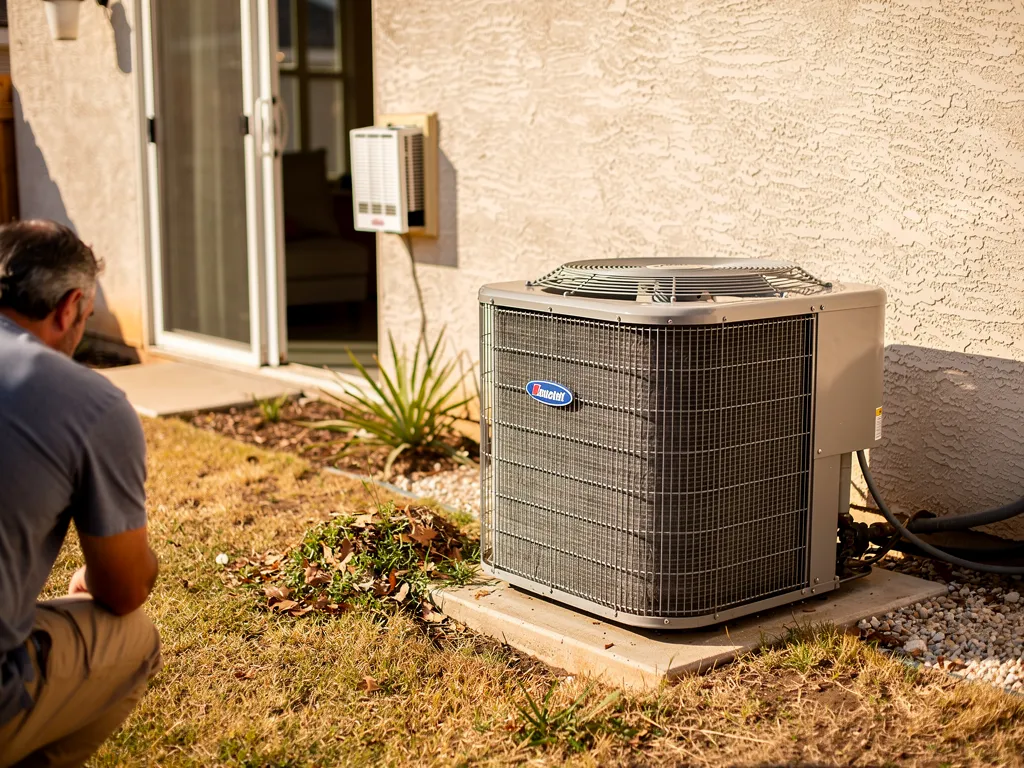
A few checks will either solve the problem or tell you it’s time to call someone. All of these are safe to do yourself.
- Check the Air Filter: A clogged filter is the single most common cause of this complaint. Replace it if it’s grey or you can’t see light through it.
- Clear the Outdoor Unit: Leave about two feet of clearance on all sides. Leaves, grass clippings, dirt and overgrown plants all restrict the airflow the unit needs to release heat.
- Open and Clear the Vents: Confirm supply vents aren’t closed, blocked by furniture, or caked with dust.
- Look for Ice on the Coils or Refrigerant Lines: Ice points to an airflow restriction or a refrigerant problem. Shut the system off, let it thaw, and call a technician.
- Check the Breaker: A tripped breaker can cut power to the outdoor unit while the indoor blower keeps running, which produces exactly this symptom.
- Listen at the Outdoor Unit: Grinding, rattling or clicking usually means a mechanical or electrical failure.
- Look for Visible Damage to Wires: Shut off power at the breaker first and don’t touch anything inside the unit. Damaged wiring is both a malfunction risk and a fire hazard.
What Will the Technician Check That I Can’t?
If those checks don’t turn up the problem, the remaining diagnostics need tools, training and certification. Here’s what a technician works through.
- Refrigerant Charge: Checking the charge requires gauges and EPA certification to handle refrigerant. A low charge almost always means a leak that needs to be found, not just topped off.
- Leak Location: If refrigerant is low, the technician traces the leak rather than recharging a system that will drain again.
- Compressor and Capacitor Testing: Electrical testing separates a failing compressor from a failed capacitor. The difference matters a lot to what the repair costs.
- Coil Temperatures and Airflow Readings: Instrument readings confirm whether the real problem is airflow, charge, or the equipment itself.
- Condensate Line and Safety Switch: The technician clears the drain line and verifies the float switch isn’t nuisance-tripping.
When Should I Seek Emergency AC Repair Services in San Antonio for Constantly Running AC?

Some situations call for immediate professional attention rather than more troubleshooting. Call for repair right away if you notice any of the following:
- Unusual Noises from the Unit: Strange sounds usually point to a mechanical issue that needs prompt attention.
- Inconsistent Cooling Performance: If temperatures vary significantly room to room, or the system doesn’t respond to thermostat changes, something deeper is wrong.
- Noticeable Leaks Around the AC: Water or refrigerant leaking from the unit is a sign of a major issue that needs expert eyes right away.
- High Utility Bills: A sudden jump in energy use with no change in habits usually points to a system problem.
- Weak Airflow That Doesn’t Improve After a Filter Change: Persistent weak airflow through the vents can mean trouble in the ductwork, the compressor, or the fan.
- Failure to Turn On: A unit that won’t start, or keeps shutting off, usually means an electrical or control issue.
Acting quickly here prevents more expensive damage, wasted energy, and a bigger repair bill down the road. Having a repair team you can call quickly makes a real difference when San Antonio heat is at its worst.
How Do San Antonio Emergency HVAC Services Address Compressor and Cooling Failures?
Emergency HVAC teams work through critical problems in a consistent, efficient way.
- Quick Response Protocols: Emergency teams prioritize fast response during peak season so homeowners aren’t left without cooling.
- Common Repairs in Emergencies: The most frequent fixes are replacing a failed capacitor, clearing a blocked condensate line, repairing electrical faults, and locating and repairing refrigerant leaks.
- Preventive Future Tips: Once the immediate issue is resolved, a good technician will also flag maintenance steps, like regular filter changes and system inspections, to help prevent a repeat visit.
Knowing what to expect from an emergency call helps homeowners understand the full scope of what these teams handle, from diagnosis to prevention.
How Does Preventive Maintenance Help Stop Your AC from Running Constantly Without Cooling?
Preventive maintenance keeps an AC unit’s components working as intended, which heads off operational problems before they turn into bigger repairs.
What Maintenance Practices Improve AC Efficiency in Hot San Antonio Climates?
A few simple habits go a long way toward keeping your system efficient in San Antonio’s heat:
- Regular Filter Changes: Replace filters every 1-3 months to maintain airflow and indoor air quality.
- Cleaning Coils: Keep evaporator and condenser coils clean to protect energy efficiency and system performance.
- Duct Sealing: Seal leaks in the ductwork to keep cool air where it belongs and cut down on wasted energy.
Together, these habits keep your system performing well, especially during the hottest months of the year.
How Often Should Homeowners Schedule AC Tune-Ups to Avoid Cooling Failures?
San Antonio homeowners should schedule an AC tune-up at least once a year.
- Before Summer Peak: A pre-summer inspection makes sure the system is ready for the season’s demands.
- At Season’s End: An end-of-season check catches lingering issues before they carry into next year.
A regular maintenance schedule keeps the system running efficiently, which means more comfort and lower energy costs over time.
What Are the Effects of San Antonio’s Climate on AC Performance and Constant Running?
San Antonio’s climate puts real strain on air conditioning systems. High heat and humidity are a big part of why units run constantly.
How Do Heat Waves and High Humidity Increase AC Repair Needs in San Antonio?
Heat waves push air conditioning units harder, and that added strain shows up as more breakdowns and repair calls. Two factors drive this:
- Extended Running Hours: High outdoor temperatures mean longer run times and more wear on components.
- High Humidity: Excess moisture makes cooling harder, straining system capacity and increasing the chance of a component failure.
Understanding how these factors connect helps homeowners get their systems ready for San Antonio’s peak demand periods.
Conclusion
An AC that runs constantly without delivering cool air signals an underlying issue that deserves prompt attention, not patience. Whether the cause traces back to refrigerant levels, airflow restrictions, electrical components, or aging equipment, San Antonio’s demanding climate leaves little room for guesswork. Our licensed technicians bring the precision and technical expertise needed to diagnose the root cause accurately and restore reliable comfort to your home. Let us show you a job done right, so your system works efficiently and your household stays cool with confidence.